
When done right, social media can help construction companies gain visibility, build trust with clients, and even recruit future employees. On the flip side, it can also eat up a lot of precious time and resources to create something that gets lost in the newsfeed—never actually reaching the people you want to talk with.
So how do you know what kinds of stories you should be sharing to make social worth your investment?
We asked experts at three West Michigan industry leaders: Wolverine Building Group, Feyen Zylstra, and Pleune Service Company.
Here are their seven top strategies for using social media in ways that actually pay off.
1. Choose One or Two Platforms That Fit Your Audience
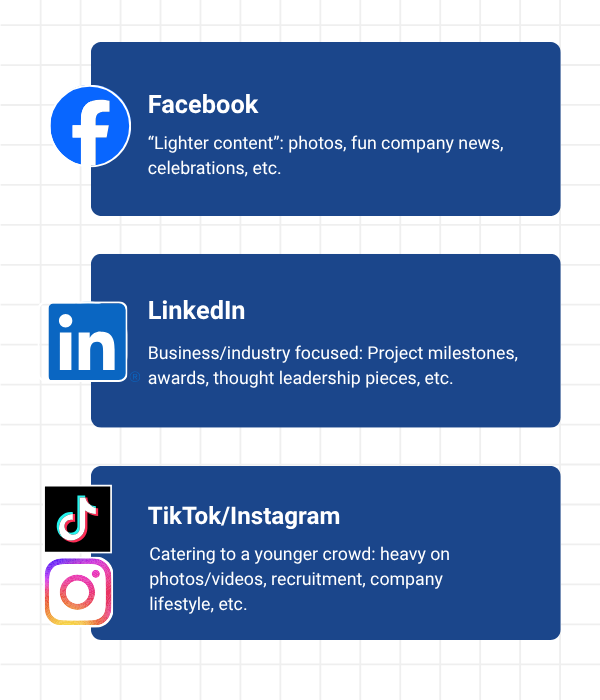
“Each platform has its own personality and audience, and not all will fit your business,” says Drake Feekings, Business Development and Community Relations Specialist at Wolverine Building Group.
“Facebook tends to be more personal: photos, celebrations, lighter content,” says Feekings. “LinkedIn is where we share project milestones, awards, or thought leadership.”
Businesses with a visual story to tell, like interior designers or those with younger audiences, might do well on Instagram or TikTok, while contractors like Wolverine perform better on LinkedIn.
Key Takeaway: Pick one or two platforms where your audience actually spends time. Then tailor the tone and content style to fit each one.

2. Align Social Media with Your Company Strategy
Creating content just to have content isn’t effective marketing. “Align your content with what your business wants to accomplish, such as increasing a niche service, and highlight those aspects on social media,” says Ken Misiewicz, CEO of Pleune Service Company.
By aligning your stories and technical content with what you want more of for your business, you connect with potential clients and opportunities.
“Know who you are and who you want to be,” says Misiewicz. For Pleune, that involves reinforcing their values of quality and precision. “We are a partnership-driven organization,” he says. “So our stories mirror how we create and maintain strong relationships.”
Key Takeaway: Mirror your content to your overall business strategy and make your expertise clear.
3. Focus on Intention and Quality Over Volume
Rather than trying to hit a certain quota of posts per week, focus on content that has value, says Feekings. “We post when we have good, strong content. Some weeks it’s just one post — but it’s something worth sharing.”
She recommends dedicating a couple of hours a week to planning and posting. Focus on relevance and accuracy, especially for technical topics that reflect your reputation.
E.B. Sonheim, Director of Marketing at Feyen Zylstra suggests creating a simple structure or calendar to help you brainstorm types of stories for your external audience. Each post is an opportunity to position your company in some way, such as showcasing certain projects.
“Be strategic about what you share,” says Sonheim. Not every story idea will align with your brand goals.
Key Takeaway: Consistency and quality matter more than frequency. Prioritize thoughtful, accurate, brand-aligned posts that represent your company well.

4. Tap into the Stories of your People
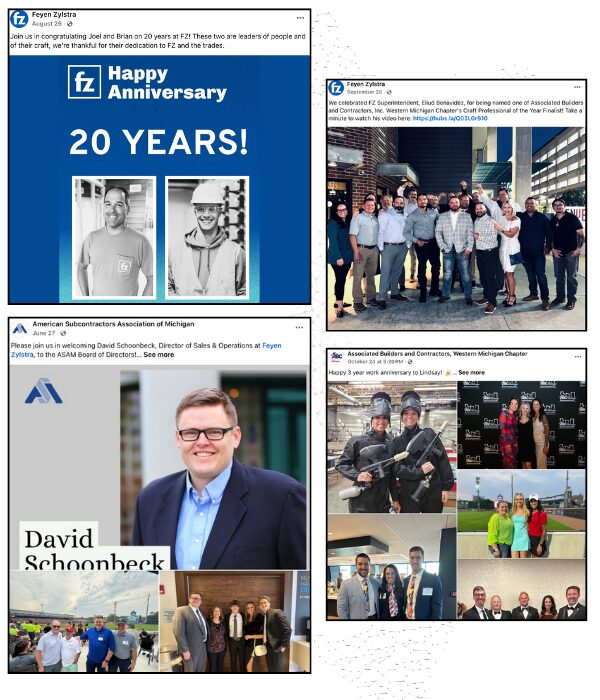
The greatest stories you can tell as a company are the ones about your people: their milestones, achievements, and talents. “People connect with people — not logos or equipment,” says Sonheim.
“Our personal stories, whether it’s of our crew members on the job or subcontractor appreciation events, perform super well,” agrees Feekings. “People can see themselves in the story, and that’s everything.”
The good news: you don’t have to be the one to record and find all the stories. Sonheim suggests empowering your team to be storytellers. “Ask team members to snap photos, share wins, and celebrate moments.” Encourage them to use social media as a way to say ‘thank you.’
Social stories at Feyen Zylstra come from all areas and job sites. Project managers, safety directors, and team members help tell stories about people living out the core values, working safely, and going the extra mile. Sometimes, Sonheim even offers an incentive, such as a $50 gift card, for the best story of the month. It helps submissions keep coming.
“We love to make our people feel like rockstars,” says Sonheim.
Takeaway: Build a system that helps people share their own stories and celebrate them publicly. Recognition builds morale and strengthens your brand at the same time.
5. Balance Human and Technical Content
A healthy blend of light-hearted and technical content keeps your feed interesting and valuable says Misiewicz.
Pleune Service Company does this by sharing seasonal and technical insights (like fall boiler prep or refrigerant updates) alongside lighter community or team posts. “It’s a blend — you want to show both your knowledge and your humanity,” says Misiewicz.
Whenever his team creates technical content, a second eye always looks at it for accuracy. “We have someone review the content who understands codes and HVAC science.”
For more human-focused content, “We love to give a taste of what it’s like to work for Feyen Zlystra,” says Sonheim. “We show the projects we’re working on and we celebrate the people who work for us.” She says, when in doubt: “People always love babies and dogs. This kind of content brings warmth to your brand.”
Takeaway: Have fun creating a mix of content. A good balance shows you’re both a trusted partner and a company people want to work with.


6. Show your Community Impact
Your content doesn’t have to just be about people and projects. It can also be about philanthropy and community involvement, says Feekings.
“At Wolverine, we prioritize being good neighbors during construction,” she says, so they may post about being mindful of the surrounding community. They also share stories about volunteering with Gilda’s Club, participating in community walks, and supporting local nonprofits. “It shows we care about people, not just projects,” she says.
Takeaway: Showcase how your company gives back — it reinforces trust, strengthens relationships, and humanizes your brand.
7. Leverage Partnerships and Engagement
One of the simpliest way to expand your reach: tag partners, architects, employees, and clients.
“When we tag collaborators — like John Ball Zoo or design partners — they often engage with our posts,” says Feekings. “It triggers a ripple effect that expands visibility beyond our usual audience.”
You can engage with your clients and partners, too. “If a client posts a project, repost it with your perspective,” suggests Sonheim. It’s not just about gaining visibility but adding value to the conversation and showing there are real people behind the brand. She also recommends always responding to comments to show that you’re listening.
While none of the companies track analytics obsessively, they do regular check-ins to review top-performing posts and plan content accordingly.
“We want our social media to reflect that we’re a professional, credible company,” Feekings says. “That’s the ultimate measure — when our online presence looks like the quality of work we deliver.”
Key Takeaway: Tag your partners, review what’s performing well, and keep refining from there.

Make sure you join the ASAM email newsletter to stay up to date with helpful industry tips and opportunities!
Want more marketing insights you can put in place today? Join ASAM on Nov. 18 for The Construction Marketing Blueprint luncheon at Bistro Bella Vita.
