
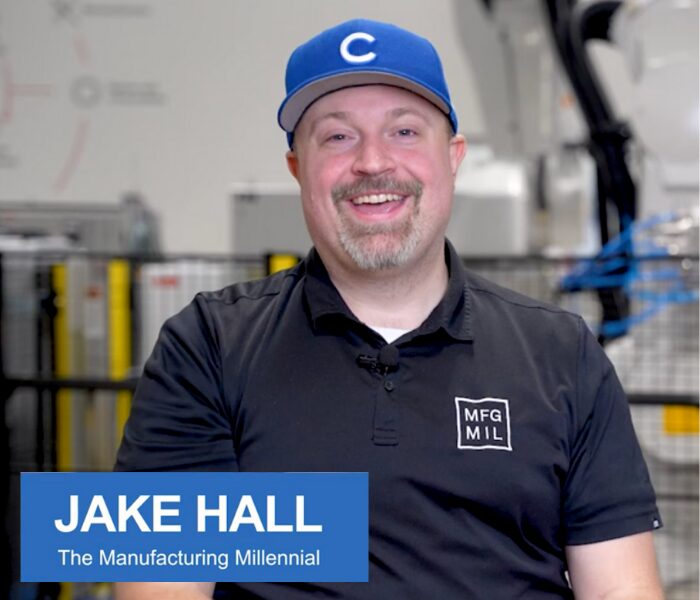
A Q&A with Jake Hall, “The Manufacturing Millennial”
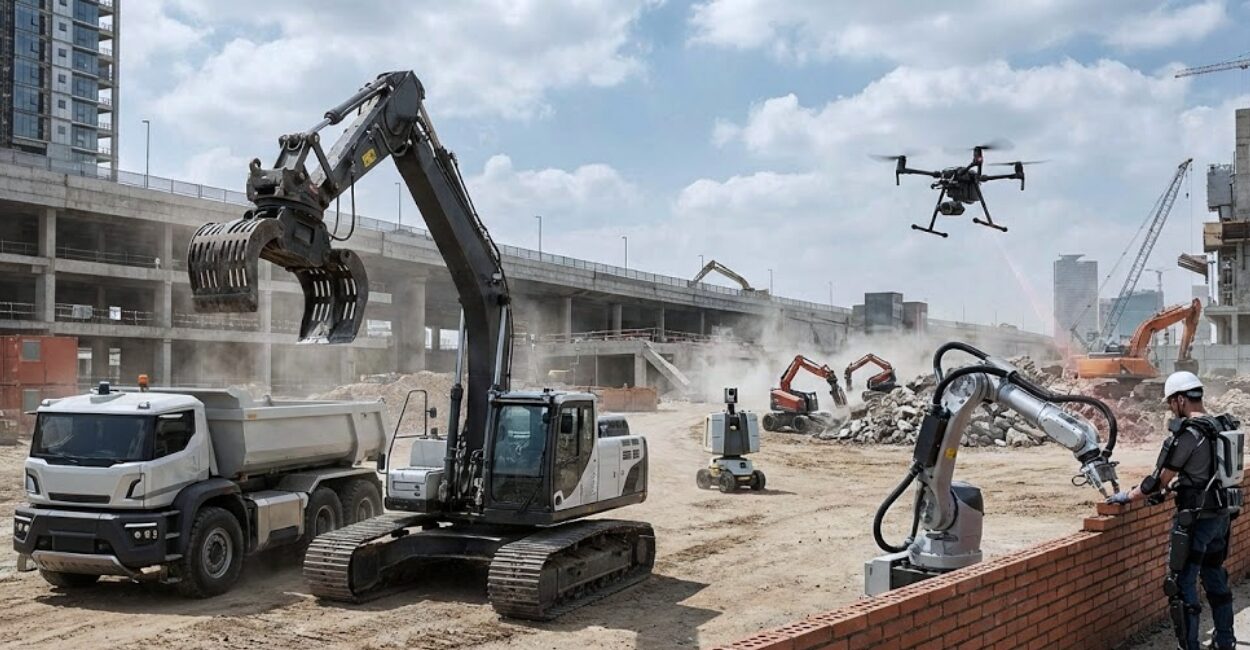
Robotics and automation have reshaped manufacturing — and construction is now seeing that same shift. Tools for layout, prefab, and site documentation are becoming more common on jobsites, and the pace of change is speeding up.
To help Michigan contractors understand what’s coming (and what’s already here), ASAM sat down with Jake Hall, better known as The Manufacturing Millennial. With nearly 20 years in automation — and 100,000+ followers and 150M+ views as a LinkedIn Top Voice — Jake has become a go-to expert for bringing advanced automation into the construction industry. In this conversation, he breaks down where automation is showing up first, what construction can learn from manufacturing, and why early adopters will have an edge in safety, workforce attraction, and competitiveness.
Q. Where are you seeing robotics and automation show up in construction right now?
Jake Hall: When I look at robotics and automation in construction, I break it into five buckets:

Earth Moving & Site Prep

Masonry & Bricklaying

Finishing Work

Demolition

Surveying & Inspection
A lot of the growth is in prefab and pre-assembly. If you can build walls, platforms, or modules in a controlled environment and then bring them to the site, it’s much easier to automate tasks like cutting, fastening, and finishing.
On-site, I’m seeing robots show up in places where work has traditionally been physically demanding and repetitive:
- Masonry and bricklaying, where robots handle heavy payloads and assist the worker.
- Drywall finishing, where robots sand and finish long runs of wall.
- Rebar tying, where instead of a worker bending over for hours, a robot can move across a deck at night and do thousands of ties.
In almost all of these examples, the worker is still heavily involved. The robot is there to remove physical risk and reduce mistakes — not to eliminate the person.
“The sites change, but the repetitive tasks don’t. That’s where robots make the most sense.”
Q. Are these tools only for giant builders, or can subcontractors benefit too?
Jake Hall: Right now, you’re seeing big players move first. For example, a major global contractor has stood up its own robotics group just to scout and pilot new applications.
That said, there’s a growing category of tools that are much more accessible for subcontractors and midsize companies.
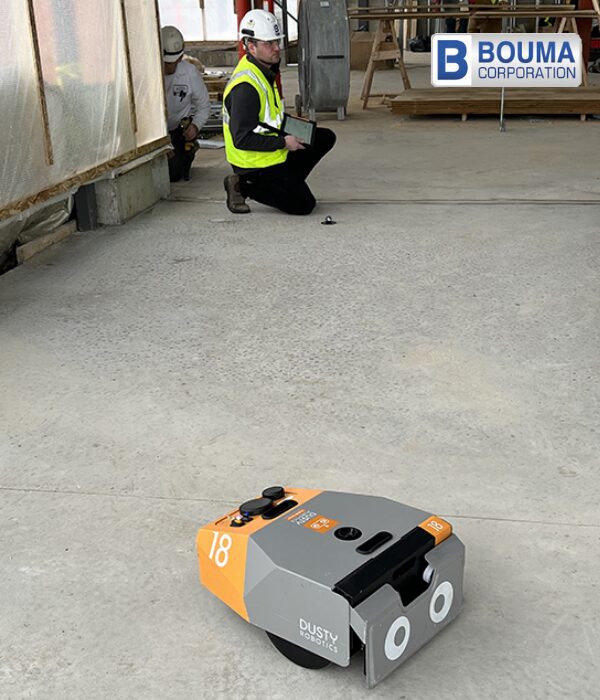
A good example is layout and site-printing robots from companies like Dusty, HP SitePrint, and Rugged. These systems can take your digital layout, walk the site, and mark where walls, penetrations, and systems need to go. Compared to some of the massive robotic drilling or skyscraper systems, the cost of entry here is far lower.
The bigger picture: In the last five years, we’ve seen more advancement than in the previous fifty. Smaller companies are adopting faster, and the technology is coming down-market quickly. It’s becoming less, “Only billion-dollar firms can do this,” and more, “Who’s willing to test, learn, and implement?”
“Technology is a talent magnet.”
Q. Where can West Michigan contractors learn more and see this tech in person?
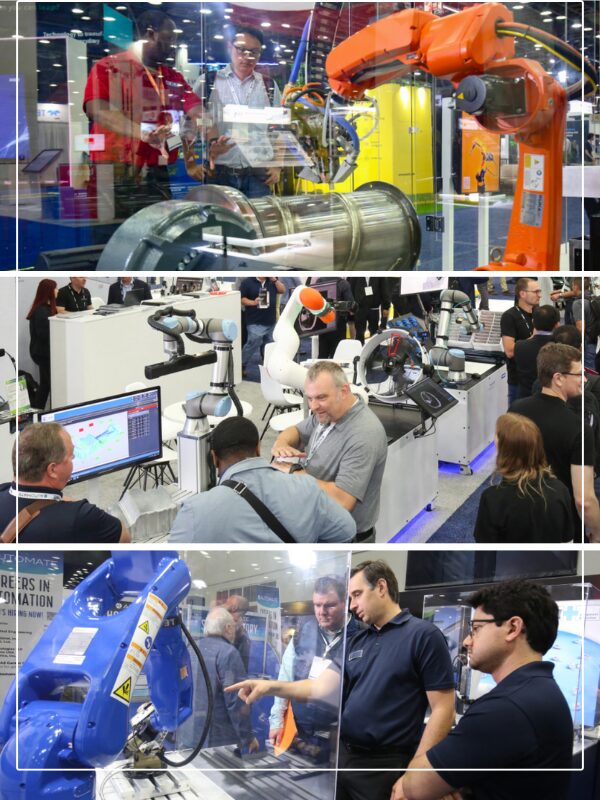
Jake Hall: One of the easiest ways to get up to speed is to attend automation and manufacturing shows, even if they’re not strictly “construction” events.
A few examples:
- Automate – a massive robotics and automation show, practically in Michigan’s backyard
- FABTECH – heavily focused on metal fabrication, welding, cutting, labeling, and finishing
- Other regional trade shows where you’ll see prefab equipment, robotic cutting, welding, and handling systems
Even if the show is “manufacturing-focused,” a lot of what’s on display applies directly to prefab, shop work, and pre-assembly for construction. If you can automate in your facility — cutting, labeling, welding, finishing — you make installation on site faster, safer, and more predictable.
My advice: send someone specifically to look for construction ideas at these shows. Walk around and ask every robotics vendor, “How are your customers using this for prefab or construction?
Q. How are AI, vision systems, and mobile robots making automation more practical for construction?
Jake Hall: Vision and AI are what make a lot of this possible. Take site surveys and digital twins for example. You can:
- Put a vision system (from companies like Faro, Hexagon, or Trimble) on the back of a Boston Dynamics Spot robot. (image example)
- Send it to walk the jobsite.
- Capture the entire environment and build a digital twin that you can compare to your BIM model.
Once you have that digital twin, you can:
- Track assets and materials.
- See what’s been installed versus what was planned.
- Spot issues much earlier by comparing the real site to the model.
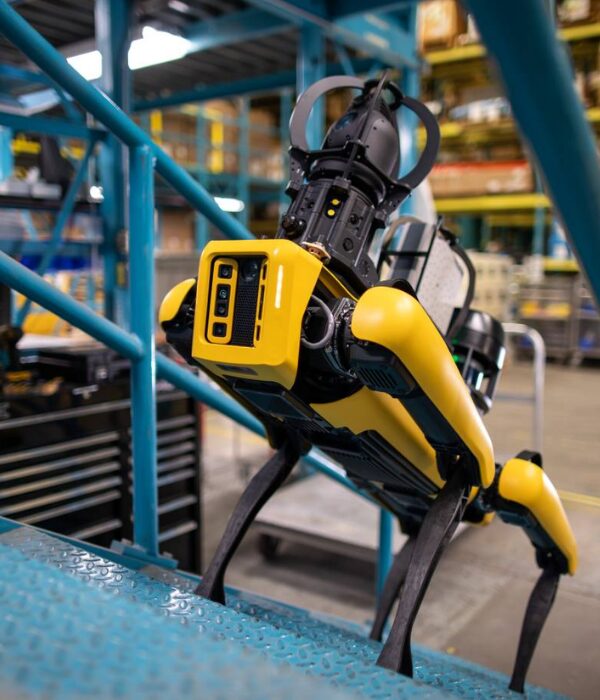
AI is lowering the barrier here. You no longer need thousands of pre-programmed examples for the system to make decisions. It can look at a brand-new site and still identify whether something matches the model or not.
On top of that, tools from companies like NVIDIA let you build fully digital construction sites and train robots in simulation. That means you can test and refine behaviors before you ever roll a robot onto a jobsite, reducing risk and cost.
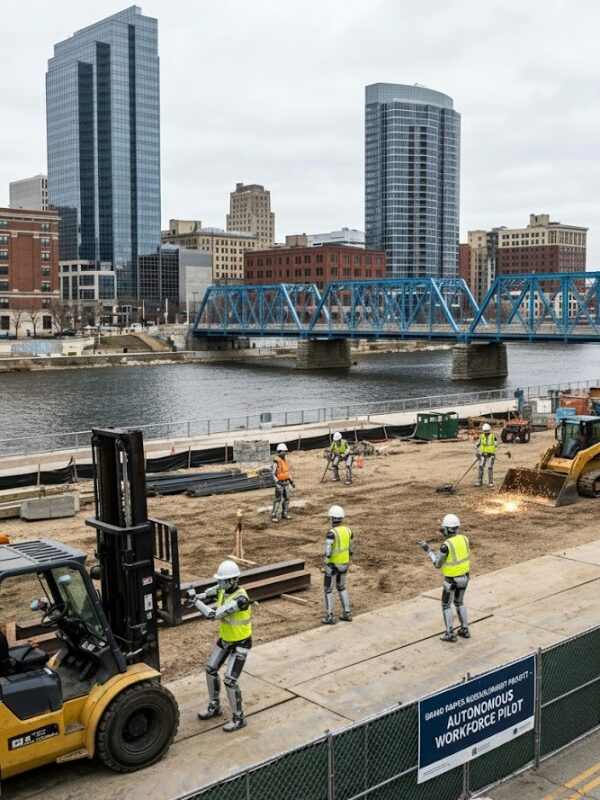
Q. Will robots replace people on the jobsite?
Jake Hall: The short answer: no.
In manufacturing, robots haven’t “taken all the jobs.” They’ve allowed companies to stay competitive in a global economy. The same will be true in construction.
“Robots don’t replace people — they help you keep people and stay competitive.”
When you bring in a layout robot or a rebar-tying robot, you’re not suddenly laying off a crew the next day. More often, you’re:
- Freeing people from the repetitive and injury-prone work.
- Needing more skilled people to program, maintain, and optimize the systems.
- Creating new career paths inside your company for tech-savvy younger workers.
For companies that have done things the same way for 20 or 30 years, robots can feel intimidating. But for the next generation, this is normal. They grew up with 3D printers in the house and coding classes in school. They’re comfortable with screens, data, and automation — and they can become leaders in your business through those strengths.
Q. What’s your biggest piece of advice for contractors who want to stay ahead?
Jake Hall: Be curious and keep asking questions.
Don’t assume that because you looked at a technology 18 months ago and it “wasn’t ready,” that it’s still not ready now. In this space, 18 months is a lifetime.
A few practical steps:
- Keep a pulse on the market. Follow robotics and automation companies serving construction.
- Revisit tools regularly. If you haven’t looked in 1–2 years, it’s probably time to look again.
- Talk to peers. If something is working really well for a contractor, they may not be shouting it from the rooftops, because it’s a competitive advantage. Ask around.
- Tie it to your real problems. Start with “What slows us down or puts people at risk?” and then go hunt for automation that addresses those specific pain points.
This isn’t about chasing the “golden egg” robot that will fix everything. It’s about recognizing that change is coming faster than you think, and the companies that start learning and experimenting now will be in a much better position than those who wait.

Final Thoughts for ASAM Members
For Michigan subcontractors, automation isn’t some distant, sci-fi future. It’s already showing up in layout, prefab, inspection, and finishing work — and it’s moving quickly.
You don’t need to buy a robot tomorrow. But you do need to:
- Pay attention to what’s emerging.
- Look for practical, ROI-driven use cases in your own operations.
- Think of technology as a way to protect your people, attract new talent, and stay competitive.
Want Jake to speak to your team or consult on emerging technology?
Connect with The Manufacturing Millennial below to explore how he can support your next event or tech initiative.
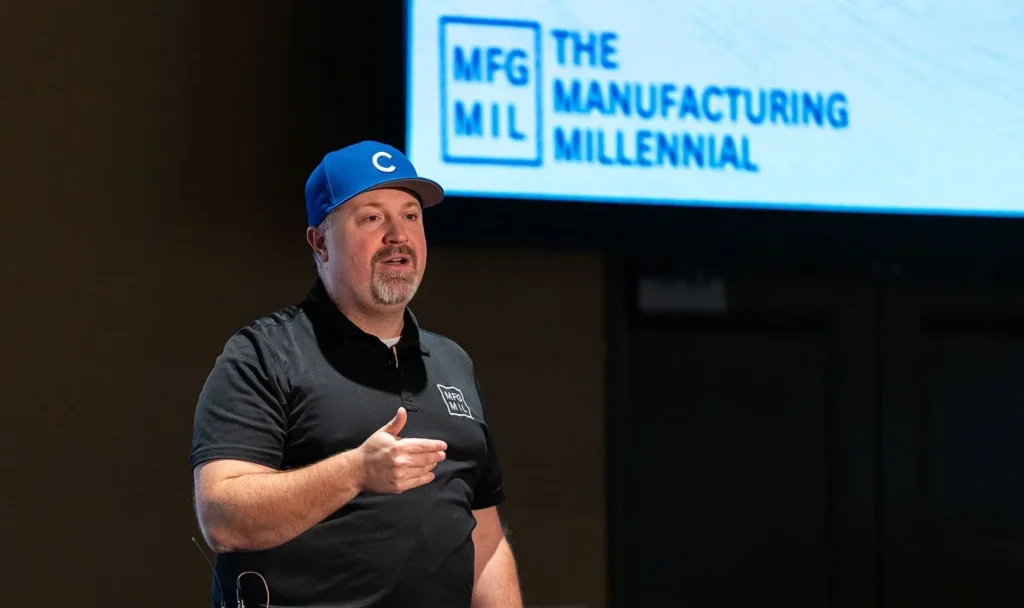

ASAM will continue bringing industry experts like Jake to our members — helping you stay informed, competitive, and connected.
Make sure you sign up to our newsletter using this form and, if you’re not yet a member, we’d love to welcome you!
Apply for a membership today.
